WHISPERS OF RAIGAD
A Third Person Experience
Project Overview
This level is a third-person, directed stealth–combat experience set within a fort inspired by the strategic architecture of Chhatrapati Shivaji Maharaj’s hill forts. It emphasizes player-driven exploration, vertical traversal, and environmental storytelling, offering multiple approaches within each space while guiding players through a structured narrative progression.
Roles & Tools
Development Time: ~3.5 months (part-time)
Role: Solo Level Designer
Engine: Unreal Engine
Playtest: 3
Iterations: 4
Responsibilities: Level layout, blockout, iteration, Blueprint scripting, pacing, and environmental storytelling
Goals
This project was intentionally designed to strengthen and validate my level design pipeline through a complete, end-to-end outpost-style level.
-
Developing a repeatable pipeline for open-world outpost / POI level design
-
Understanding how non-linear spaces differ from linear level structures
-
Designing for player choice, allowing multiple routes and playstyles
-
Design distinct districts with clear identity and navigation
-
Translate real-world fort architecture into readable gameplay spaces
Inspiration
Growing up hearing stories of Chhatrapati Shivaji Maharaj and the strategic brilliance of his hill forts, I wanted to translate that architectural philosophy into a playable level experience. The project is inspired by Ghost of Tsushima, particularly its approach to fort infiltration, player freedom, and environmental storytelling.
Rather than recreating a real fort, my goal was to reinterpret the design principles behind Shivaji Maharaj’s forts and blend them with modern third-person stealth–combat gameplay.
Level Overview
Map Beats & Pacing
Beat 1 – Arrival & Narrative Context
Base District
Design Goals: Orientation · Environmental Storytelling · Safe Onboarding
The player begins at the base of the fort, where destroyed homes, debris, and environmental damage communicate the aftermath of an invasion. This opening space establishes tone and narrative context.
Key Design Elements
-
Low enemy density for safe player onboarding
-
Strong visual landmarks guiding vertical progression
-
Emphasis on environmental storytelling over exposition
Beat 2 – Infiltration & Navigation Challenge
Ascent Routes
Design Goals: Exploration · Spatial Confusion · Player Choice
As the player ascends the fort, paths intentionally branch and overlap, inspired by the defensive maze-like layouts of Shivaji-era hill forts. This beat challenges the player’s spatial awareness while rewarding observation and exploration.
Key Design Elements
-
Intentionally non-linear pathing with readable landmarks
-
Optional stealth-focused Milkmaid Path with narrative reward
-
Navigation designed to encourage player-led discovery
Beat 3 – First Major Conflict
Barracks District
Design Goals: Tension Spike · Combat/Stealth Validation · Emotional Stakes
The barracks function as the first high-pressure encounter zone, validating the player’s chosen playstyle. The primary objective—rescuing prisoners—adds emotional weight while reinforcing mechanical mastery.
Key Design Elements
-
Noticeably increased enemy density
-
Multiple approach vectors and entry points
-
Strong use of vertical positions for stealth takedowns
-
Support for both stealth-first and combat-forward playstyles
Beat 4 – Mid-Level Escalation & Traversal Focus
Market District
Design Goals: Momentum Shift · Traversal Mastery · Dynamic Pacing
Following the prisoner rescue, the player pursues an enemy leader through the market district. This beat shifts pacing toward fast movement, rooftop traversal, and reactive decision-making.
Key Design Elements
-
Roof-based traversal routes reinforcing spatial mastery
-
Chase-driven pacing that maintains narrative urgency
-
Blended stealth and movement mechanics
Beat 5 – Final Infiltration Challenge
Citadel District
Design Goals: Peak Tension · Player Mastery · High-Risk Stealth
The citadel serves as the climactic stealth challenge. The objective—retrieving the sword without raising the alarm—tests everything the player has learned across the level.
Key Design Elements
-
Three distinct infiltration routes (two stealth-focused, one main route)
-
Multiple interior entry points supporting player-driven planning
-
High risk–reward stealth gameplay
-
Maximum player agency with minimal hand-holding
Beat 6 – Resolution & Escape
Citadel District
Design Goals: Decompression · Narrative Closure · Contrast
After retrieving the sword, the player escapes through the back gate. This final beat intentionally reduces pressure, providing emotional release and clear narrative resolution.
Key Design Elements
-
Reduced enemy presence to signal success
-
Strong contrast to the high-tension citadel encounter
-
Clean narrative and gameplay closure
My Process
Research, LDD, Reference
Paper Design
I used paper layouts to map player flow, district connections, and alternate routes before blockout. This helped establish a clear main path while supporting stealth and exploration options.
I did this for all the main districts, and these are the first and final draft comparison here are some examples
CITADEL DRAFTS
MAP DRAFTS
Blockout & Iteration
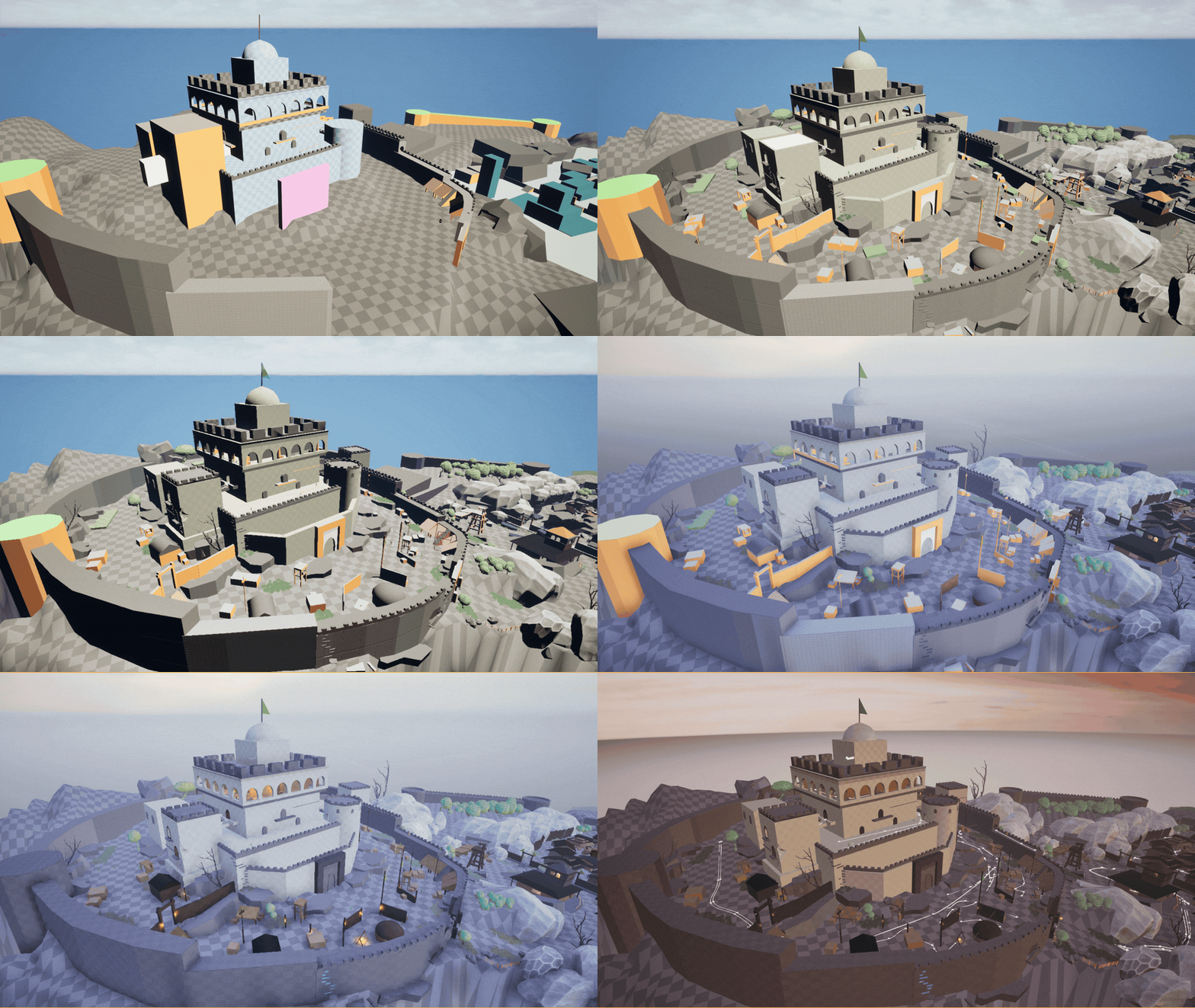
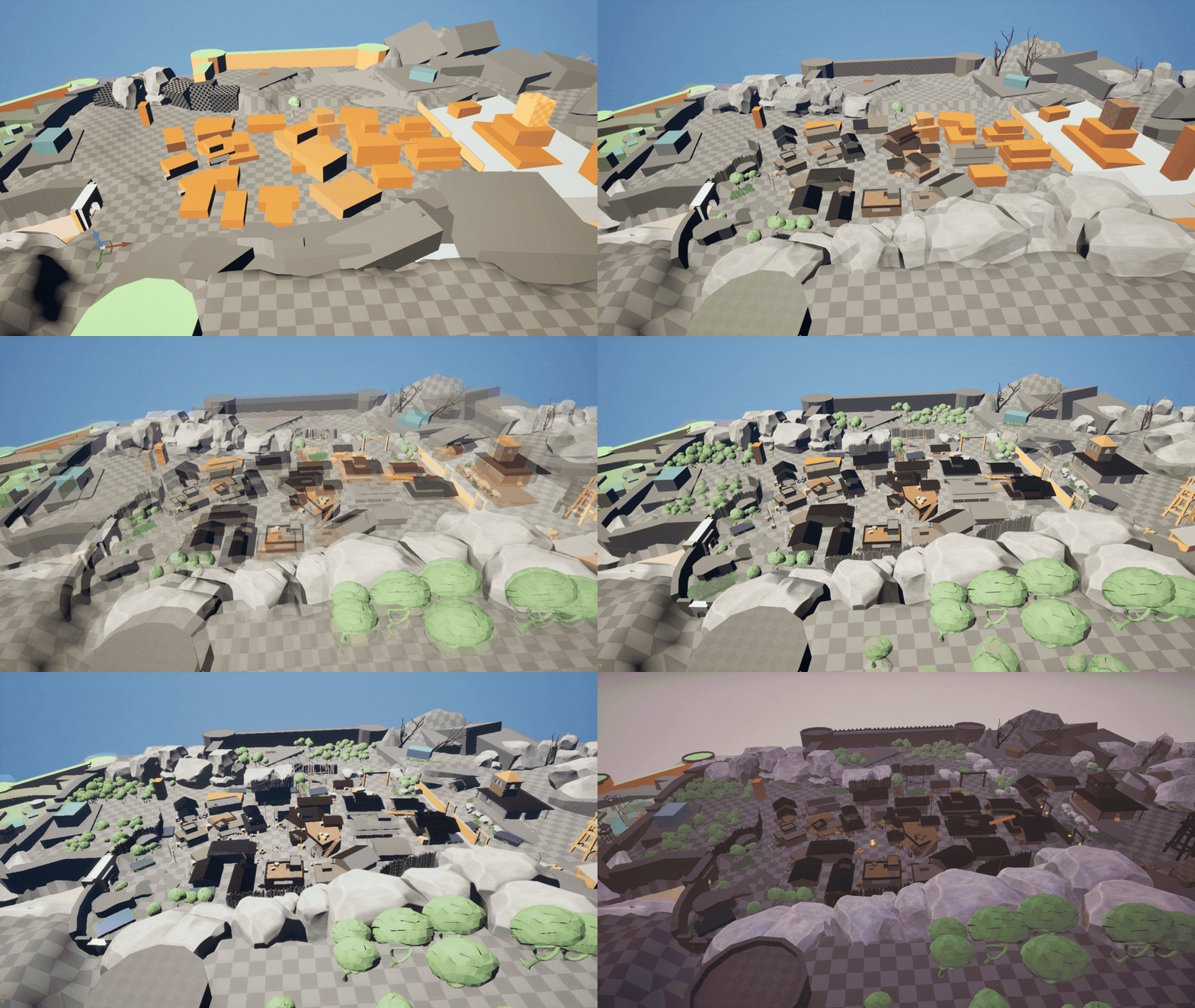
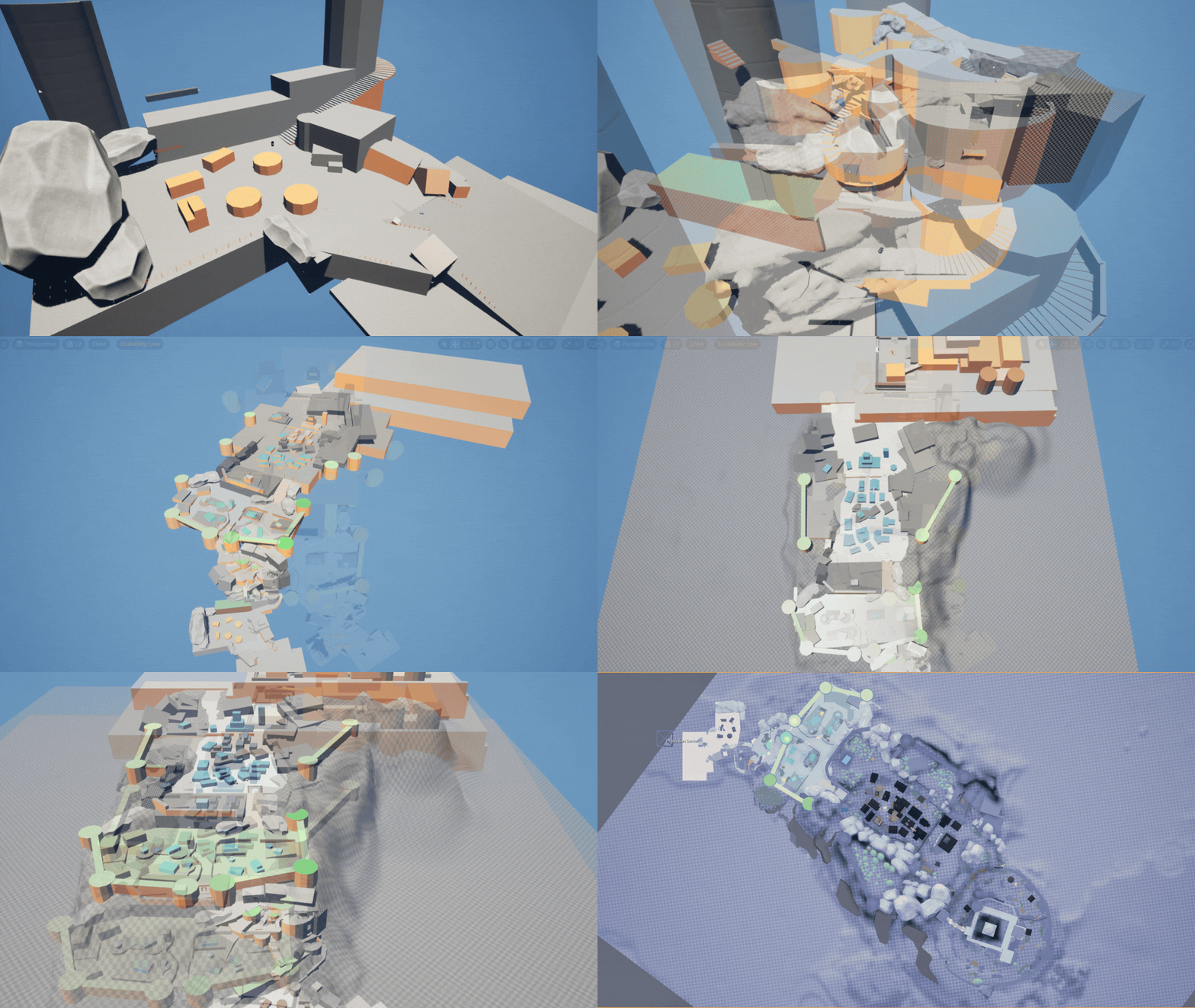
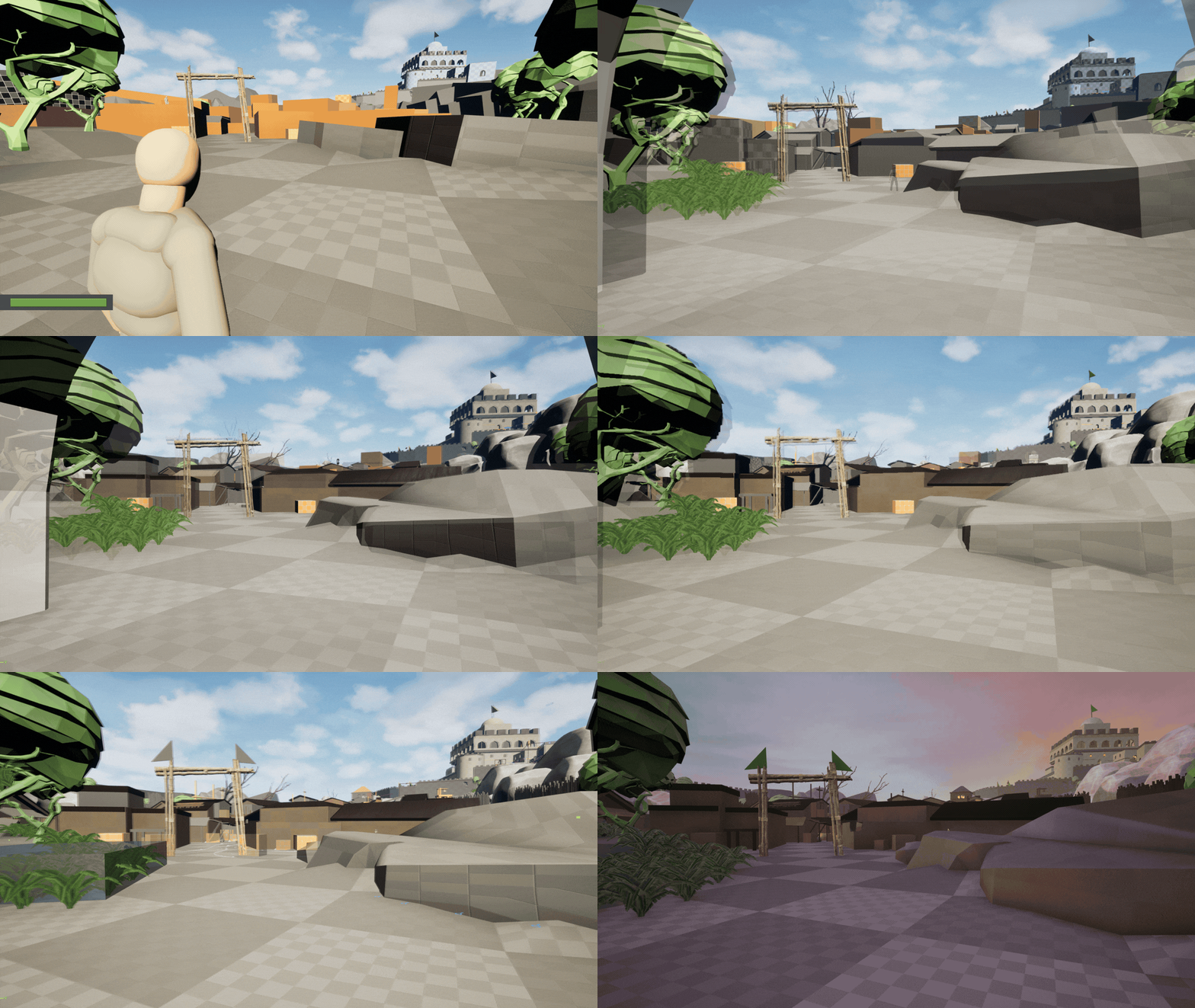
Blockout timelapse showcasing the evolution of all major districts. The last one represents an in-game composition from the player’s point of view upon entering the Market District, framing the Citadel as a clear visual goal and long-term landmark.
TIME LAPSE
HIGHLIGHTS OF KEY DESIGN CHALLENGES
Citadel Scale & Entry Readability
Issue
The initial Citadel blockout was oversized and read more like a palace, making alternate paths difficult to design and causing players to default to the main gate.
Iteration
Reduced overall scale, restructured all buildings, and exposed stealth entries from the Market District with multiple clearly readable access points to the main structure.
Result
The Citadel better matched the fort theme, supported multiple approaches, and allowed players to identify stealth options before committing.
Stealth Route Readability (Market District)
Issue
Players missed the shortcut through the shack window and defaulted to the main route.
Iteration
Repositioned and slightly enlarged the window to align with player sightlines and better communicate it as a traversal option.
Result
The stealth route became immediately readable, increasing player choice without additional UI.
Interior Scale & Combat Density
Issue
The side-building entry led into an interior space that felt too large and underpopulated, reducing tension and clarity of encounter.
Iteration
Added a central structural pillar to break up the space, create cover, and reduce perceived scale.
Result
The interior felt more contained, improved combat readability, and supported better enemy positioning.
Final Chamber Stealth Engagement
Issue
The sword chamber felt underwhelming and made stealth difficult due to limited engagement opportunities.
Iteration
Added environmental detail to support cover and adjusted enemy patrol timings to create clearer stealth windows.
Result
The final encounter became more engaging, readable, and viable for stealth-focused playstyles.
Other Design Decisions
Stealth Entrances
Both stealth routes are showcased to highlight their structure and gameplay intent. These paths were designed to challenge the player’s traversal and platforming skills by combining climbing, grappling, running, and jumping mechanics, creating an engaging movement-focused experience. Enemy interactions were intentionally excluded to preserve stealth flow and allow players to focus on navigation and spatial problem-solving.
Diverge route from main route which connects to milkmaid route
Milkmaid Route which starts from Forest entrance and ends at barracks
Vertical Highways
To support stealth-first gameplay, I designed a network of vertical highways across each district. These elevated traversal routes leverage rooftops, fort walls, ropes, and grappling points to provide continuous movement and vantage opportunities. By connecting key spaces vertically, the level encourages spatial awareness and alternative approaches while preserving player agency and readability.

Barracks District
In the barracks district, I used more of rooftops path. Wooden walkways link these elevated spaces, creating continuous traversal routes

Market District
The Market District is designed around a chase sequence, using rooftop traversal and vertical pathways to maintain momentum and guide the pursuit.

Citadel District
In citadel district I used combination of all the things like grapple hooks, elevated towers, Rooftops, fort walls to provide verticality
Environmental Storytelling


People who got killed during an invasion
Damage done to the market

Fort walls being broken during the Mughal invasion
Reflections
This project taught me how important clarity and control are in level design. I started with big ideas and a large scope, but through feedback and iteration, I learned when to simplify, rescale, and focus on what actually improves the player experience.
Using real-world fort architecture was exciting at the same time; it was challenging. One of the main challenges was scale. At first, I tried to stay very close to real-world proportions, but later I had to rescale spaces and start again after playtesting to better support gameplay, readability, and pacing. I also did research on whether Ghost of Tsushima forts are replicated from real forts or not.
If I continue working on this project, I would spend more time on playtesting, improving enemy behavior, and adding more replay value. The fort has the potential to support multiple missions, including routes outside the main fort that connect to caves and back entrances. I chose not to explore these ideas fully in order to manage scope.
Overall, this project helped me develop a more focused and feedback-driven design process and taught me to design levels based on how players actually move, see, and make decisions. It was a challenge for me to design outpost level, which can be replayable for various missions. I enjoyed the whole process, and I'm very happy with how it turned out at the end and lessons I learned.